
5 Questions to Grill Your SEO Agency PA on in 2026
If you’ve ever sat across from an SEO agency in Pennsylvania and left feeling more confused than enlightened, you’re not alone. I recall a time when I genuinely believed my previous SEO partner had everything under control—until I saw my rankings plummet without warning. That moment was a wake-up call, a lightbulb flickering on that maybe, just maybe, I wasn’t asking the right questions. The truth is, knowing which questions to ask your SEO agency in PA can make or break your local visibility, especially in competitive markets like Pittsburgh.
Why You Can’t Afford to Skip These Key Questions
In 2026, the landscape of local SEO is more dynamic than ever. Google’s algorithms are constantly evolving, making it crucial to hold your agency accountable with targeted questions. Not asking the right questions today could mean watching your competitors outrank you tomorrow. For instance, studies show that over 70% of consumers visit a business within 24 hours of a local search, emphasizing how vital it is to appear prominently on Google Maps and local listings. If you want real results—more calls, visits, and conversions—it’s essential to go beyond surface-level promises and dig into the nitty-gritty of your SEO strategy.
Is Your SEO Agency PA Really Using Proven Strategies?
One mistake I made early on was assuming every agency knew what they were doing without verifying their tactics. I trusted broad promises about “improving rankings” without scrutinizing their approach. This oversight cost me valuable time and revenue. That’s why, before signing any agreement, you should ask specific questions about their methods. Are they leveraging recent local SEO techniques? Do they understand how to optimize for Google Maps and GMB features? To get tips tailored for Pittsburgh, check out our guide on top strategies for local Google Maps success. Getting honest answers helps you assess whether you’re partnering with a competent team or just throwing your budget into the void.
Pinpoint Your Keywords and Location Signals
Start by identifying the most relevant keywords your potential clients use in Pennsylvania and Pittsburgh. Use tools like Google Keyword Planner and analyze competitors to find high-traffic, low-competition terms. For instance, target phrases like ‘Pittsburgh plumber’ or ‘Philadelphia estate lawyer.’ Once you have your keywords, optimize your Google My Business (GMB) listing with these terms, emphasizing your primary location. Ensure that your business name, address, and phone number (NAP) are consistent across all listings and your website.
Optimize Your Google Maps Profile for Local Visibility
Claim and Verify Your GMB Listing
If you haven’t claimed your Pittsburgh GMB listing, do it immediately. Verification boosts trust and visibility, making your profile more likely to appear at the top of local searches. Follow the verification process and ensure your profile information matches your website data exactly. Focus on selecting the correct primary category, adding detailed descriptions, and uploading high-quality images that showcase your business.
Leverage Local Keywords in Your Content
Embed your targeted local keywords naturally into your website content, blogs, and service pages. Use it in headers, meta descriptions, and image alt tags. For example, write blogs about Pittsburgh-specific events or local case studies to boost relevance. Remember, search engines favor content that demonstrates community engagement and topical authority.
Build Authority Through Local Citations and Reviews
Acquire citations from reputable local directories like Yelp, BBB, and industry-specific sites. Check for consistency in NAP data to ensure search engines see your business as trustworthy and authoritative. Encourage satisfied customers to leave reviews on your GMB profile. Respond to all reviews professionally, especially negative ones, to demonstrate active management. Positive reviews significantly impact your local rankings and customer trust.
Implement Technical SEO for Local Rankings
Ensure your website loads quickly and is mobile-friendly, as most local searches are conducted on smartphones. Use schema markup to help search engines better understand your location and services. Implement localized structured data and optimize your site’s URL structure with city or neighborhood names. Regularly audit your website for crawl errors, duplicate content, or missing meta tags that could hinder visibility.
Monitor, Adjust, and Stay Ahead
Use tools like Google Search Console and analytics platforms to track your local search performance. Pay attention to your ranking fluctuations, click-through rates, and local traffic patterns. Identify which keywords or strategies yield the best results and refine your tactics accordingly. Stay updated on the latest local SEO trends, such as new Google Maps features or algorithm shifts, by regularly reviewing resources like Google Maps Pittsburgh optimization tips. Consistent effort and adaptation are key to maintaining your competitive edge in Pennsylvania’s bustling markets.
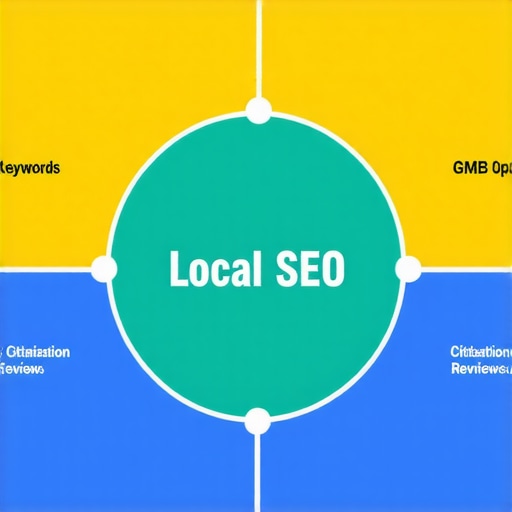
Many business owners assume that hiring a local SEO agency in Pennsylvania guarantees instant results. However, this belief can lead to costly misconceptions. One prevalent myth is that all SEO strategies are equally effective, regardless of the provider’s expertise. In reality, nuances such as understanding Google’s evolving algorithms, especially for Google Maps and GMB optimization, require specialized knowledge. For example, agencies that rely solely on outdated link-building techniques risk penalization and stagnant rankings. Do your homework before choosing a partner—ask about their familiarity with latest Google Maps optimization tactics, which are crucial for dominating local markets in Pittsburgh and beyond.
Another common misconception is that volume of reviews alone improves local rankings. While reviews are important, quality and management play significant roles. Negative or fake reviews can harm your visibility and credibility. A seasoned agency understands how to ethically cultivate genuine reviews and respond appropriately to maintain trust and compliance.
Now, consider this critical advanced nuance: the false sense of security from superficial local SEO tactics can be dangerous. Many practitioners focus heavily on NAP consistency and keywords without leveraging schema markup or structured data that tells Google precisely about your business’s context. Interestingly, schema implementation is proven to boost visibility and click-through rates, especially in competitive Pittsburgh neighborhoods. Ignoring these technical elements can leave your GMB profile vulnerable to being overshadowed by competitors employing advanced, yet underutilized, techniques.
Are You Overlooking Advanced Optimization Tactics?
Many assume local SEO success depends solely on on-page elements and reviews, but the real game-changer often lies in integrated local map strategies. For instance, utilizing recent Google Maps features such as Q&A, posts, and local events can significantly impact your rankings. Moreover, advanced attribution tracking helps you measure the true ROI of your efforts, preventing the costly mistake of investing in tactics that don’t yield tangible results. According to industry expert Neil Patel, combining technical, content, and review management strategies yields the best long-term benefits in local markets.
In sum, avoidingthese myths and embracing nuanced, data-driven tactics can position your Pennsylvania business to outperform competitors. For concrete, proven strategies, check out our comprehensive local SEO guide.
Have you ever fallen into this trap? Let me know in the comments!
Once you’ve laid down a robust local SEO foundation in Pennsylvania, particularly around Pittsburgh, maintaining those rankings demands the right set of tools and consistent effort. In my experience, leveraging specific software and methods helps ensure your Google Maps presence stays strong and adapts to evolving algorithms.
Prioritize Data Deep-Dives with Advanced Analytics
Google Search Console remains my go-to for monitoring website health and understanding how users interact with my content. However, for local SEO, I combine it with BrightLocal — I personally swear by its citation tracking and reputation management features. It provides detailed insights into your local citations’ consistency and reviews, which are critical for Pittsburgh businesses aiming for sustained visibility. This isn’t just about monitoring; it’s about proactively adjusting your strategy based on concrete data.
Automate with Tagging and Monitoring Tools
Consistency over time is key. I rely on SEMrush for keyword tracking and competitor analysis. Its position tracking feature allows me to see how my rankings for key Pittsburgh phrases evolve weekly. Automation helps me identify drop-offs early and avoid long-term penalties or stagnation. I also use Google Maps optimization techniques alongside these tools to refine my local presence regularly.
Stay Ahead with Schema and Technical Checks
Technical SEO isn’t just a one-and-done effort. I recommend Screaming Frog for crawling your site and pinpointing structured data issues—implementing schema markup is proven to boost local click-through rates, especially when customized for Pittsburgh neighborhoods. According to Google’s technical guidelines, structured data signals like LocalBusiness schema assist Google in understanding your location and services more precisely, keeping you competitive in saturated markets.
Where Will This Take Your Strategy?
Looking ahead, I predict AI-powered analytics and real-time monitoring will be game changers for local SEO management. These technologies will enable even smaller businesses to adapt swiftly, outpacing bigger competitors rigidly sticking to outdated tactics. That’s why I urge you to integrate tools that not only track your current standings but also suggest immediate actionable insights.
How do I keep my local SEO working long-term?
Consistency, coupled with the use of specialized tools—like BrightLocal for citation management, SEMrush for keyword monitoring, and Screaming Frog for technical audits—is your best bet. Regularly updating your Google My Business profile with fresh posts, reviewing your competition’s tactics, and correcting technical issues based on insights ensure your Pittsburgh-based business stays visible and dominant. For more advanced tactics, check out our comprehensive local SEO guide—and don’t hesitate to try automating your review response system or citation audits to save time while maintaining quality.
Remember, in local SEO, tools are your allies but action and consistency are your best friends. Ready to improve your Google Maps rankings? Start by implementing one of these advanced monitoring techniques today!
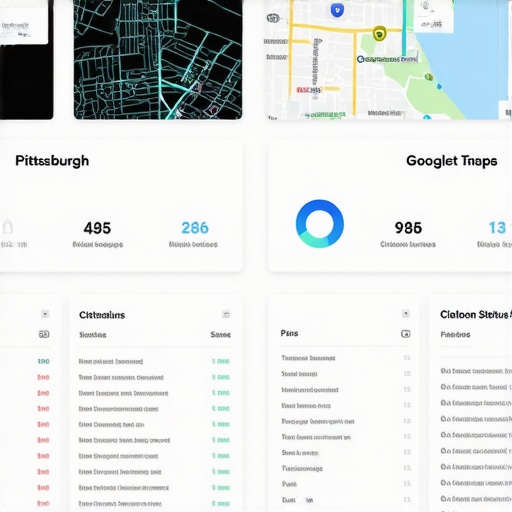
Illustration of a digital dashboard displaying local SEO metrics, citation statuses, and ranking positions for Pittsburgh businesses—highlighting the importance of data-driven maintenance.
Lessons I Wish I Learned About Local SEO in Pittsburgh
One of the hardest but most valuable lessons I encountered was realizing that not all SEO agencies are created equal—some rely on outdated tactics that can actually hold your business back. I once believed that optimizing NAP consistency alone would guarantee top rankings, but I soon discovered that technical nuances like schema markup and local engagement are game-changers. Additionally, I underestimated the importance of regularly updating and monitoring your Google My Business profile—it’s not a set-it-and-forget-it situation. Lastly, I learned that competitor analysis in Pittsburgh’s vibrant neighborhoods reveals subtle strategies that often separate the top performers from the rest. Embracing these insights transformed my approach and could do the same for you.
My Essential Arsenal for Local Map Domination
For anyone serious about local SEO in Pennsylvania, I recommend leveraging tools like BrightLocal for citation management and reputation tracking—it’s invaluable for maintaining PA businesses’ visibility. SEMrush, for detailed keyword tracking and competitor insights, has helped me stay ahead in Pittsburgh’s competitive landscape. To ensure my website’s technical health, I regularly run audits with Screaming Frog. Last but not least, I rely on Google’s schema markup guidelines to enhance my listings’ relevance. These tools keep me sharp and ready to adapt to Pittsburgh’s rapid digital growth.
Fuel Your Drive with a Clear Vision
When it comes to boosting local visibility, taking decisive action fueled by reliable data makes all the difference. Your path to beating the Pittsburgh chains and small boutiques alike starts with understanding your unique audience and using the right tactics, like regularly updating your GMB posts or engaging with reviews authentically. Remember, the map to local SEO success isn’t a secret—it’s a consistent, data-driven journey that rewards persistence and strategic thinking. If you’re ready to take your Pittsburgh business to the next level, start with one actionable step today. What’s holding you back from dominating your local market? Let’s discuss below!