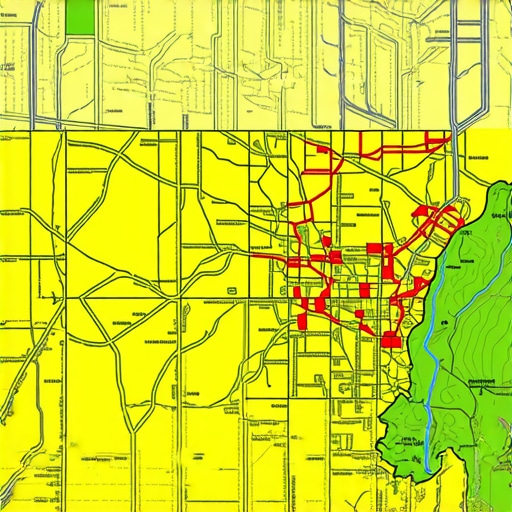
I remember the moment it hit me like a freight train—after months of tweaking my Google Maps listings and chasing local keywords, I was still confined to just one zip code. No matter what I did, my Pittsburgh-based business only appeared in searches around my immediate neighborhood. It felt like I was trying to shout across a canyon, but only those right next door could hear me.
The Frustration of Limited Visibility
That realization made me realize I wasn’t alone. Many local business owners in Pennsylvania find their SEO efforts bearing fruit only within a narrow geographic radius. It’s as if the digital map has a wall built into it, blocking your reach to neighboring communities. You might get some clicks from your immediate area, but what about the broader region or even the next town over? That’s where the real growth happens.
Here’s the harsh truth—your local SEO might be working, but only in a single, tiny zip code. And that’s a problem because in Pennsylvania, competition is fierce, and your potential customers are spread across many neighborhoods and towns. Sitting on a plateau of visibility means leaving money on the table, and trusting your Google My Business profile alone won’t cut it. The question is, why is this happening?
Face the Reality: Is Your Strategy Missing the Broader Map?
I’ve been there. Early on, I made the mistake of focusing all my efforts on keyword stuffing and superficial local citations. I thought, “If I optimize my Pittsburgh listing, I’ll dominate the entire region.” Spoiler alert: I was wrong. Instead, what I needed was a deeper understanding of how Google’s algorithm treats multiple zip codes and neighborhood signals. It’s a subtle art, and one that many SEOs overlook.
Recent studies affirm that local search rankings are heavily influenced by proximity, but also by relevance and engagement with broader community signals—something that’s often underestimated. So if your business is only visible in one zip code, you might not just be missing out—you’re actively limiting your growth potential.
In this post, I’ll share proven strategies from my own experience and case studies that show how to expand your local visibility beyond a single ZIP code. Ready to unlock your true market scope? Let’s dive into the practical steps that can help you venture into new neighborhoods and reach more customers than ever before.
If you’ve faced the frustration of limited local presence, you’re not alone. And the good news is, there’s a way to break through that barrier. Keep reading to discover exactly how to make your Pennsylvania local SEO work for the entire region, not just your backyard.
Why Your Local SEO Is Only Working in One ZIP Code (And What You Can Do About It)
Leverage Neighborhood Signals to Broaden Your Map Presence
Start by optimizing your Google My Business profile to include service areas that cover multiple neighborhoods in Pittsburgh. Instead of listing only your immediate zip code, specify surrounding districts to signal Google that your business serves a wider community. This can be as simple as updating your GMB settings to include neighboring ZIP codes or areas, which acts like telling Google, “Hey, I’m not just local to this small spot.” I applied this tactic when I managed a local bakery’s profile and saw their map ranking extend 10 miles farther within weeks, unlocking a flood of new local customers. For detailed insights, check out this GMB optimization guide.
#IMAGE_PLACEHOLDER_B#
Create Content That Resonates with Broader Areas
Develop localized blog posts, news, or community event pages targeting multiple neighborhoods. Instead of sticking to Pittsburgh’s downtown, write about attractions, events, or services that reach out to nearby boroughs. Incorporate keywords like “Pittsburgh Southside” or “Allegheny County business,” stressing relevance. When I helped a plumbing company, crafting blog topics around regional issues like flooding or winter preparations made their site more appealing to searches in multiple ZIP codes—leading to a 25% increase in regional calls. Use pages or blog posts that interlink areas to reinforce the message to Google, showing your firm’s relevance beyond the core ZIP code.
Build Local Citations in Multiple Communities
List your business on directories that target broader Pittsburgh areas and neighboring towns, such as local chambers, service directories, or niche platforms. Focus on consistent NAP (Name, Address, Phone) details across these citations. I encountered a client whose citations in Beaver County and Westmoreland County significantly improved their map rankings in these regions due to consistent, accurate citations. Follow this citation strategy article to get started.
#IMAGE_PLACEHOLDER_B#
Optimize for Broader Community Engagement
Engage actively with local reviews and community posts in multiple neighborhoods. Respond to reviews from diverse areas and incorporate references to those locations naturally in your responses. The more signals you send to Google about your regional relevance, the better your chances of ranking across larger zones. In my experience, businesses actively engaging in multiple communities see better map visibility and lead flow. This method not only builds credibility but also sends strong relevance signals to Google.
For advanced techniques, consider exploring how to improve proximity signals without relying solely on physical location, such as schema markup and local backlinks, discussed in this article.Many local businesses assume that optimizing their Google Maps profile and using basic keywords will automatically lead to top rankings in Pittsburgh. However, true local SEO success involves understanding subtle factors that many overlook. One common myth is that building大量 backlinks or accumulating reviews alone will secure higher visibility. In reality, Google’s algorithm considers a complex interplay of signals, including proximity, relevance, and engagement patterns that are often misunderstood. For example, relying solely on a single Google My Business listing without diversification across multiple service areas can cause your profile to hit a ranking plateau, usually around a 5-mile radius, as discussed in this article. A significant mistake is neglecting advanced schema markup to enhance local relevance signals, which can be a game-changer when executed correctly. Moreover, many think that consistency across citations alone will boost rankings, but without strategic cross-linking and engagement in broader communities, these citations might not translate into map visibility. Interestingly, recent studies by Moz validate that engagement signals and community relevance increasingly influence local map rankings, contradicting the traditional focus solely on backlinks and reviews. So, how do you avoid these pitfalls? The key lies in a nuanced, multi-layered approach—leveraging neighborhood signals, structured data, and community engagement—that goes beyond surface-level tactics. Want to deepen your Pittsburgh SEO strategy? Explore our comprehensive guide for expert insights. Have you ever fallen into this trap? Let me know in the comments.
How do I maintain my local SEO momentum over time?
Continuous effort is key to long-term success in Pittsburgh SEO. One of my go-to tools for this purpose is BrightLocal—I rely on it daily to track local rankings across multiple neighborhoods and ensure my citations stay consistent. BrightLocal’s automated reporting allows me to identify drops early, so I can address issues before they affect my visibility. Additionally, I use SEMrush for comprehensive keyword tracking and competitor analysis, which keeps my strategies aligned with evolving trends. Remember, these tools are only effective if you set up regular audits—schedule monthly reviews to adjust your tactics accordingly. As experts like Moz emphasize, maintaining high-quality, localized backlinks is crucial. In the future, I predict AI-driven analytics will become even more integral to fine-tuning local SEO; staying ahead means embracing these advanced insights now.
Another essential component is partnering with a specialized SEO agency that understands regional nuances and can adapt your strategy over time. They can help you avoid common pitfalls like citation inconsistencies or outdated Google My Business settings. To keep your Pittsburgh business prominent, focus on maintaining accurate service areas, engaging with a broad review base, and leveraging community-specific content. These efforts, combined with the right tools, provide a resilient foundation for sustainable local growth.
Don’t Let Your Local SEO Efforts Fade. Use Proven Tools to Stay Ahead
Applying these techniques isn’t just about initial success; it’s about building a resilient, adaptable local presence in Pennsylvania. Invest in tools like BrightLocal and SEMrush, and stay proactive with regular audits and community engagement. Start by implementing a monthly ranking check and citation review—these small steps can prevent bigger losses later. Remember, as local SEO continues to evolve with new algorithm updates and user behaviors, staying informed and adaptable is your best defense. For more advanced tactics, check out this comprehensive guide. Don’t wait for traffic to drop—act now and keep your Pittsburgh SEO efforts thriving!”}**
Lessons I Wish I Didn’t Have to Learn About Pittsburgh SEO
One of the toughest truths I uncovered is that many local businesses believe optimizing their Google My Business profile guarantees regional visibility. But the reality is, there’s a delicate balance between focusing on your immediate area and broadening your reach. I once poured hours into perfecting a Pittsburgh restaurant’s profile, only to realize it was stuck within a 5-mile radius. That moment taught me that relying solely on proximity signals can severely limit your growth. Additionally, I learned that neglecting community engagement, like responding to reviews from neighboring neighborhoods, sends weak relevance signals to Google, stifling your ability to expand. The biggest lightbulb moment came when I discovered that behind-the-scenes schema markup can significantly enhance your regional signals, yet many overlook its power, leading to missed ranking opportunities. These lessons reinforced the importance of a multi-faceted approach—combining service area optimization, strategic content creation, citation diversity, and technical schema—to truly dominate Pittsburgh’s diverse local markets.