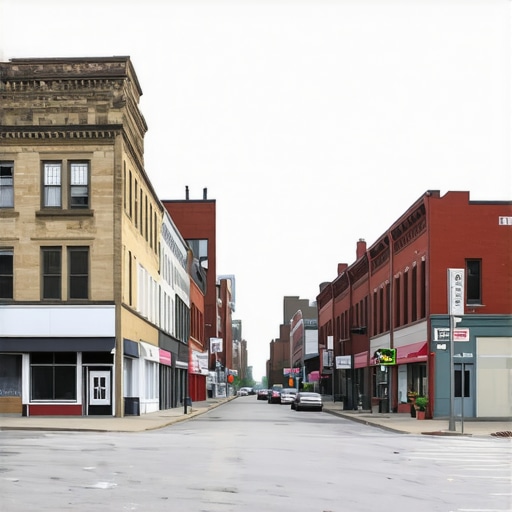
Why Your Pittsburgh City Pages Are Ghost Towns and How to Fix Them
You’ve seen them before – perhaps you even own a few. They are the “service area” pages designed to capture leads in Ross Township, Bethel Park, or Monroeville, yet they sit in the dark corners of the internet, gathering digital dust. At Pittsburgh Local SEO, we call these “Ghost Towns.” These pages exist in your sitemap, but they receive zero organic traffic, trigger zero phone calls, and offer zero value to your bottom line. As we move into 2026, the old “copy-paste” method of city page seo is not just ineffective; it is actively harming your brand’s authority in the eyes of Google.
I’m Jon Crain, and over the last decade, I’ve watched the evolution of local search from a simple game of keyword density to a complex ecosystem of proximity and real-world signals. The “Ghost Town” syndrome occurs when businesses attempt to scale their reach without scaling their relevance. In this deep dive, we are going to dismantle the traditional city page model and rebuild it using a 2026 hyperlocal strategy that forces Google to take notice of your business, whether you’re a contractor in the North Hills or a law firm downtown.
The Death of the “Template” City Page in Pennsylvania
For years, the “standard” local SEO advice was simple: Create a page for every zip code or suburb, swap out the city name in the H1 tag, and wait for the leads to roll in. In 2026, that strategy is dead. Google’s algorithm, powered by advanced machine learning and the “Helpful Content” framework, has become incredibly adept at identifying thin, templated content. If your page for Upper St. Clair looks identical to your page for Sewickley – save for the town name – Google views it as spam.
The modern algorithm operates on a triad of ranking factors: proximity, relevance, and prominence. Template pages fail because they lack “relevance.” They don’t speak to the specific needs, landmarks, or culture of the local community. Furthermore, the data shows a massive shift in user behavior. The “near me” boom is no longer a trend; it is the standard. Searches for “shopping near me” and “services near me” have grown by over 200% in recent years. This shift has placed the burden of proof on your city pages. They can no longer be generic landing pages; they must be hyper-relevant hubs that prove you are an active participant in that specific geographic area.
When you build pages the SERP (Search Engine Results Page) never asked for, you are wasting crawl budget. Google doesn’t want to index 50 versions of the same service description. It wants to see that you understand the nuances of the Pennsylvania market. If your content doesn’t reflect the reality of the local landscape, it will remain a ghost town, buried on page five where no one – not even your most desperate customer – will find it.
Why Proximity is Killing Your Reach (And How City Pages Bridge the Gap)
One of the most frustrating aspects of local search for Pittsburgh business owners is the “5-mile ranking wall.” You might have a perfectly optimized office in Moon Township, but as soon as a potential customer searches for your services from Cranberry or Wexford, you disappear from the Map Pack. This is due to the physical proximity factor that dominates the Google Business Profile (GBP) algorithm. Google prefers to show the closest possible results to the user to ensure convenience.
However, a sophisticated local seo strategy uses city pages to bridge this gap. A well-constructed city page serves as a localized “home base” for your services in an area where you lack a physical storefront. But here is the secret: the page cannot stand alone. To break through the proximity wall, you must employ advanced google business profile seo techniques that link your GBP data to your localized landing pages. By creating a symbiotic relationship between your profile and your city pages, you signal to Google that your “service area” is backed by real-world authority.
Without this connection, your reach is limited to the immediate radius of your router. Optimized local profiles and their associated city pages can lead to a 33% increase in online transactions and a massive 56% revenue increase because they capture high-intent traffic that is geographically ready to buy. We focus on expanding that 5-mile radius by proving to Google that your relevance extends far beyond your front door. This requires more than just words; it requires a technical alignment of your website and your Google Business Profile.
5 Reasons Your Pittsburgh City Pages Aren’t Ranking
If your pages aren’t performing, it’s usually due to one of these five critical failures. Identifying which one is holding you back is the first step toward recovery.
- Lack of Hyperlocal Content: Google knows what Pittsburgh looks like. If your page doesn’t mention specific landmarks like the Liberty Bridge, the North Shore, or the specific traffic patterns of the Parkway West, it doesn’t feel “local.” Generic content is a red flag. Check out The Secret to Building Pittsburgh City Pages That Don’t Look Like Spam for a deeper look at content creation.
- Missing NAPCW Consistency: NAPCW stands for Name, Address, Phone, Category, and Website. If the information on your city page contradicts your Google Business Profile or your local citations, Google loses trust in your data. Inconsistency is a primary reason for ranking drops.
- No Local Schema Markup: Many businesses fail to use JSON-LD structured data to tell Google exactly what the page is about. Without “LocalBusiness” or “ServiceArea” schema, you are relying on Google’s bots to “guess” your relevance.
- Zero Internal Linking: A city page shouldn’t be an island. If your main “Services” page or your “About Us” page doesn’t link to your city pages, Google views them as low-priority “orphan pages.” They need internal authority to rank.
- No “Real World” Engagement Signals: Google now prioritizes “real engagement.” This means your pages need to show that people actually interact with your business in that city – think local reviews, project photos from that zip code, and community involvement.
To see where your business stands, you should utilize a google business profile audit tool. This will highlight the gaps between your physical location and your desired service areas, showing you exactly where your city pages are failing to provide the necessary “geo-signals” to rank in the Map Pack.
The 2026 Hyperlocal Playbook: How to Build Pages That Actually Rank
Fixing a ghost town requires a complete shift in how you build content. We follow a four-step playbook designed for the 2026 search environment.
Step 1: Geo-Targeted Content and Neighborhood Clusters
Stop trying to rank for “Pittsburgh” as a whole if you are a small business. The competition is too high. Instead, target neighborhood clusters. Create content that mentions Mt. Washington, Squirrel Hill, or Lawrenceville. Talk about the specific challenges of working in these areas – perhaps the narrow streets of the Slopes or the historic preservation requirements in certain wards. This level of detail is something AI-generated fluff cannot replicate, and it’s exactly what Google is looking for in a hyperlocal seo strategy.
Step 2: Track Performance with Precision
You cannot manage what you do not measure. We recommend using local seo software to track your keyword performance by specific zip code. A page might rank #1 in 15201 but #20 in 15213. Understanding these micro-fluctuations allows you to tune your content to the specific areas that are underperforming.
Step 3: Local Proof Points
Every city page should feature reviews and case studies specifically from that area. If you are a plumber with a page for Fox Chapel, that page should display a testimonial from a Fox Chapel resident. It should show a photo of your truck parked near the Fox Chapel Yacht Club. These are “geo-location signals” that provide the “real-world” proof Google now demands. For more on this, read our guide on Mastering Pennsylvania Local SEO: Winning Tips for Small Businesses.
Step 4: Advanced Schema Implementation
Technical SEO is the backbone of local success. You must implement specific local schema that defines your service area within the code. Using JSON-LD to define your `areaServed` property tells Google’s crawlers exactly which municipalities you cover, reducing the ambiguity that leads to poor rankings. This is a core component of a modern local seo strategy.
Beyond the Page: Using Your Google Business Profile to Drive Traffic
A city page does not live in a vacuum. To truly dominate the Pittsburgh market, your website must work in tandem with your Google Business Profile. This is where a google maps ranking service approach becomes vital. You need to feed the algorithm a steady diet of local signals that extend beyond your on-page text.
One of the most effective ways to do this is through GBP Posts. When you complete a job in Shaler, post a photo to your profile with a caption mentioning the location and link it back to your Shaler city page. This creates a “local loop” that confirms your activity in that area. Furthermore, you must focus on building hyperlocal Pennsylvania links. A backlink from a local Pittsburgh neighborhood blog or a community center carries more weight for google business profile optimization than a generic link from a national site.
Finally, keep an eye on your competitors. If they are outranking you in the Map Pack, it’s likely because they have a higher “density” of local mentions. Using local seo tools can help you identify where their citations are coming from and how you can close the gap. Remember, the “proximity wall” is not insurmountable; it just requires a higher level of precision and better data than your competition is using. You can learn more about these signals in our post on Why Your Pittsburgh Map Audit is Missing the Only Ranking Signal That Matters.
Conclusion: Turning Ghost Towns into Lead Machines
The transition from “Ghost Town” to “Lead Machine” doesn’t happen overnight, but the path is clear. The era of quantity-over-quality in city page seo is over. To win in Pittsburgh in 2026, you must embrace relevance, technical precision, and hyperlocal engagement. By moving away from thin templates and toward rich, neighborhood-specific content backed by a strong Google Business Profile, you can break through the 5-mile wall and claim your territory.
Stop settling for pages that no one visits. Whether you choose to audit your current strategy using professional local seo software or you want a team of experts to handle the heavy lifting, the time to act is now. Contact Pittsburgh Local SEO today to turn your service area pages into your most productive sales assets.